Embedded Systems & Microcontroller Development
Replaced blocking delays with interrupt-driven state machines, integrated 6+ peripherals over I²C, SPI, UART, and Bluetooth, and validated signal integrity with oscilloscope and serial instrumentation on an ARM Cortex-M4.
Dates
2025-12-01
Role
Embedded Systems Developer
Stack
Overview
A multi-peripheral embedded systems project on the ARM Cortex-M4. The focus was production-quality firmware: no blocking delays, no polling loops where interrupts work better, and full bus-level validation before declaring anything done.
Interrupt-Driven Architecture
Replaced all blocking HAL_Delay()-style calls with interrupt-driven state machines and non-blocking timing logic. Each peripheral interaction is modeled as a state transition. The CPU never stalls waiting for a peripheral; it services an interrupt when the peripheral is ready.
This cut worst-case response latency and set the system up for eventual RTOS task decomposition.
Peripheral Integration
Integrated 6+ peripherals over four bus protocols:
| Peripheral | Protocol | Notes |
|---|---|---|
| Ultrasonic distance sensor | GPIO trigger + capture timer | Interrupt on echo pulse |
| 3-axis accelerometer | SPI | DMA transfer for continuous sampling |
| LCD display | I²C | Non-blocking write queue |
| Piezo buzzer | PWM timer | Frequency-controlled tone generation |
| UART terminal | UART | Circular DMA receive buffer |
| Bluetooth module | UART | AT command initialization + data framing |
Signal Integrity & Validation
Every peripheral was validated at the signal level before integration, not just "does it work" but "does it work correctly":
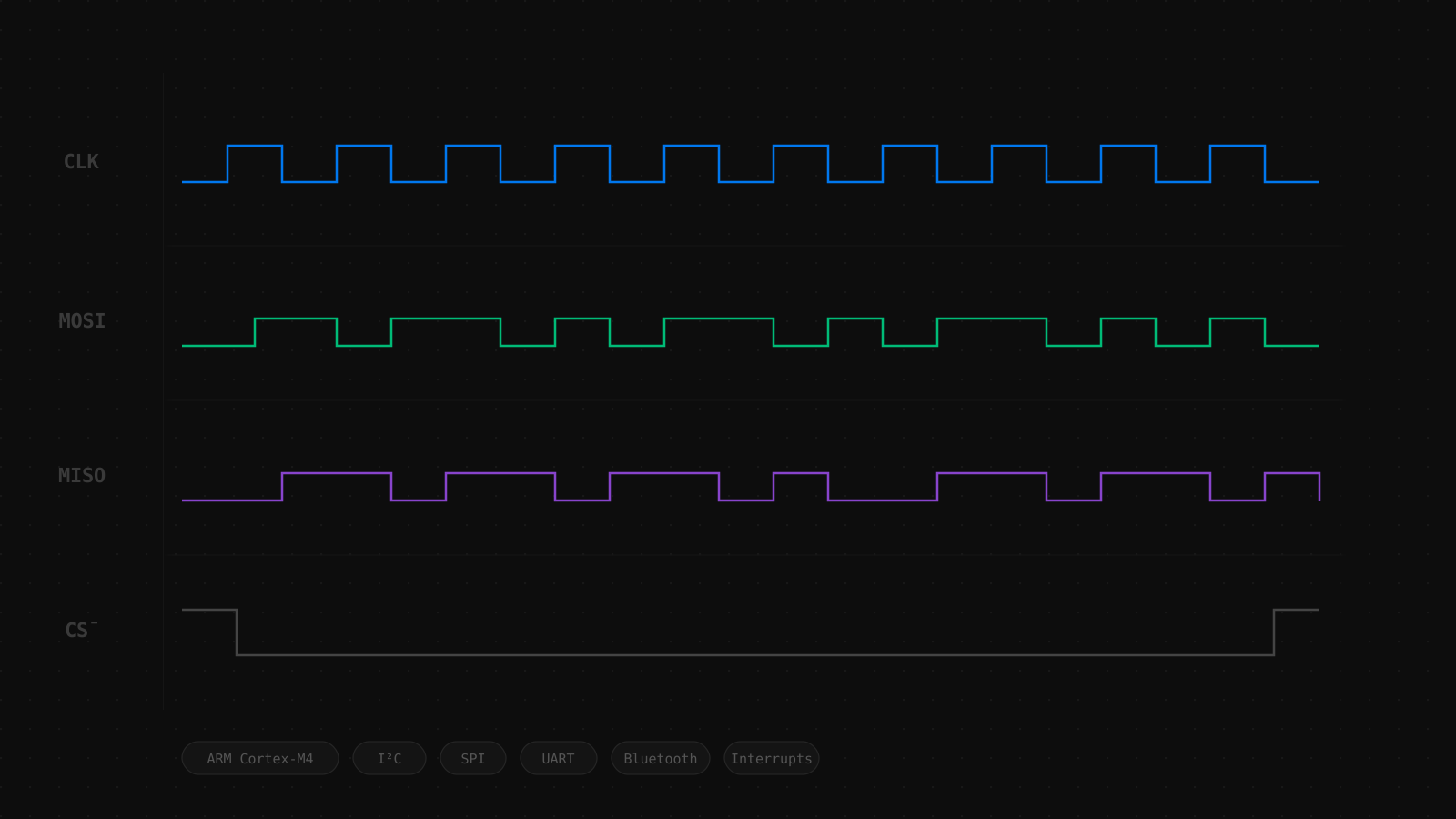
- Oscilloscope probing on SPI clock, MOSI, and chip-select lines to verify timing margins against datasheet specs
- Logic analyzer capture on I²C to confirm ACK/NACK behavior and address arbitration
- Serial terminal logging with timestamps to verify interrupt latency and state machine transitions
Finding bus issues at the signal level, rather than in application logic, saved significant debugging time on the higher-level integration.