<Sukhman Herr/>

PPG Heart Rate Detection Circuit & PCB

Designed a BJT monostable multivibrator, edge differentiator, and LED driver circuit targeting 180 BPM detection, validated in LTSpice, and manufactured through JLCPCB.

Date

2026-03-01

Role

Analog Circuit & PCB Designer

Stack

KiCadLTSpiceBJT Circuit DesignJLCPCBOscilloscope
PPG Heart Rate Detection Circuit & PCB
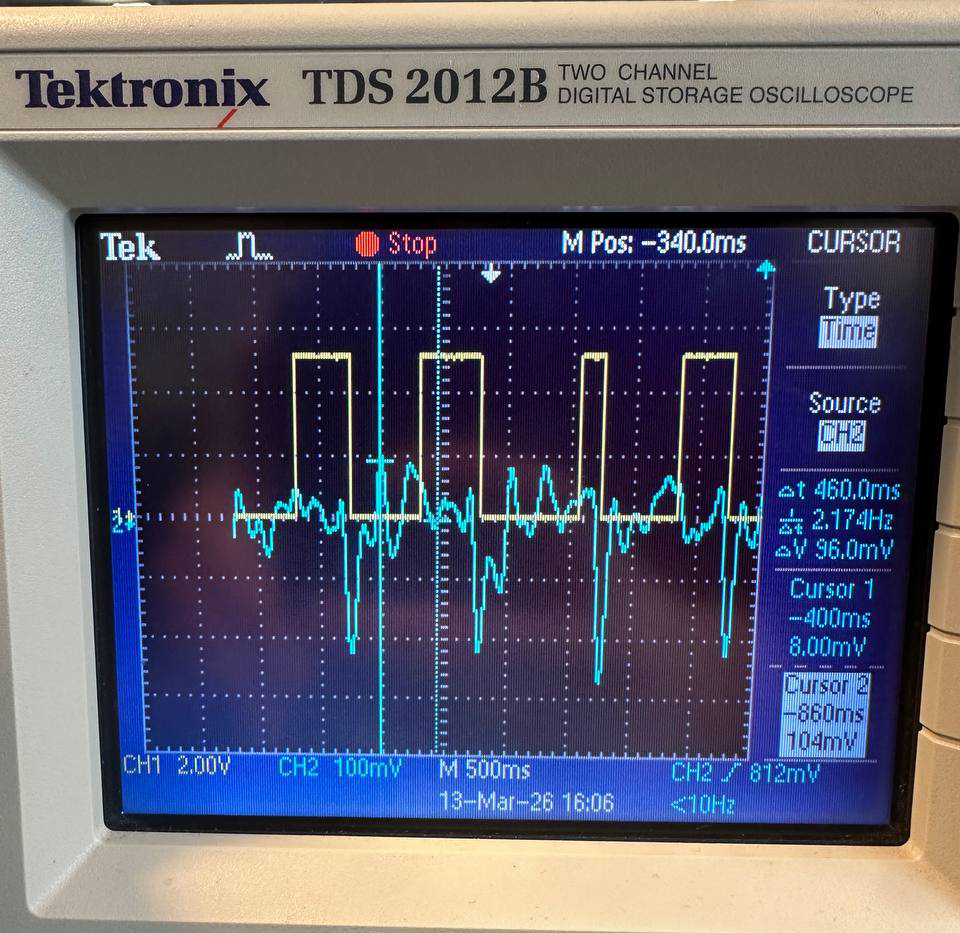
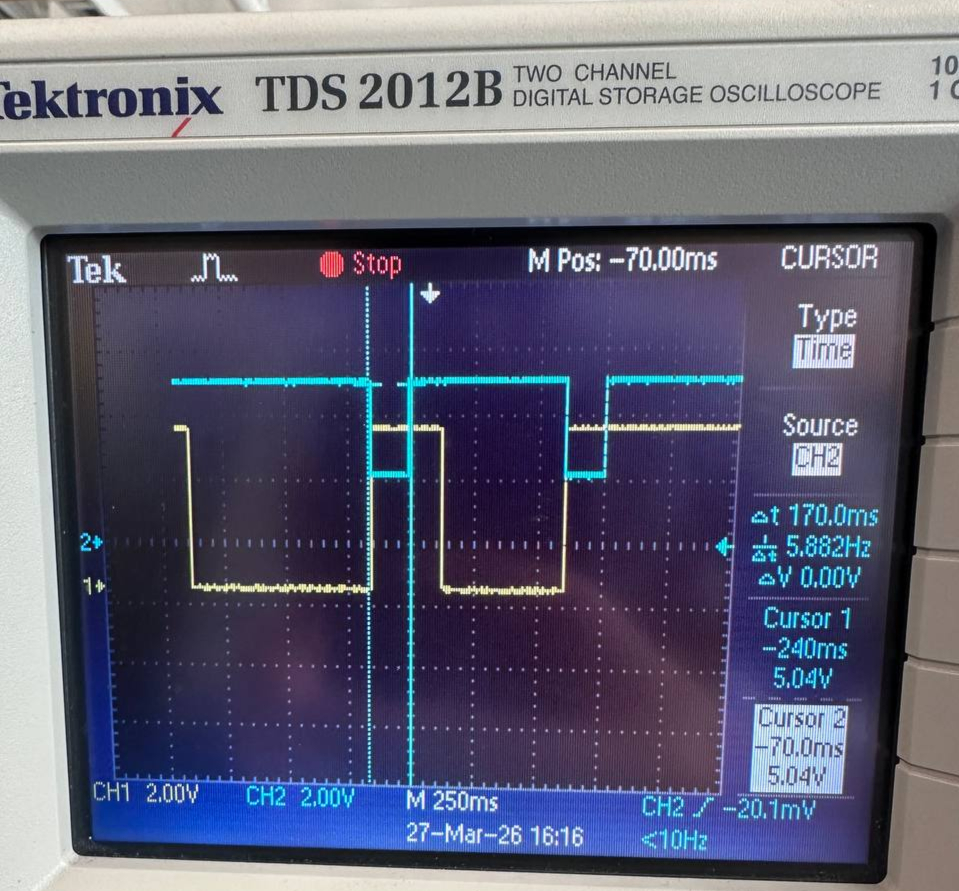
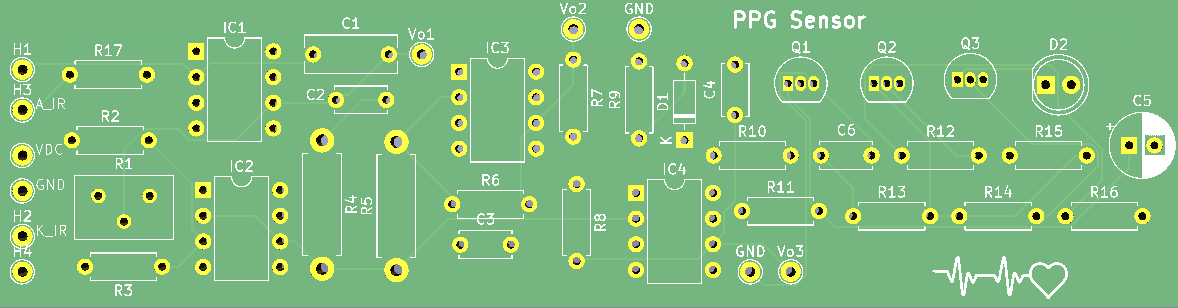
## Overview A full analog signal chain for photoplethysmography (PPG) heart rate detection — from raw optical signal to a clean digital pulse suitable for timing. The target was reliable detection up to **180 BPM**, designed entirely with discrete BJTs and passive components. ## Signal Conditioning Raw PPG signals from a photodiode are low-amplitude and high-noise. The front-end uses a **transimpedance amplifier** stage followed by a **BJT-based amplification and filtering chain** to improve signal-to-noise ratio before the timing detection stage. The filter roll-off was set to suppress motion artifact and 50/60 Hz mains interference while preserving the fundamental pulse frequency band. ## Monostable Multivibrator & Edge Differentiator The conditioned signal feeds a **BJT monostable multivibrator** that produces a clean fixed-width output pulse on each detected heartbeat. An **edge differentiator** upstream ensures only the rising edge of the conditioned waveform triggers the monostable, preventing double-triggering from signal ringing. The LED driver stage converts the monostable output to a visible indicator pulse, providing a real-time visual confirmation of each detected beat during bench testing. ## Simulation & Validation All timing-critical stages were validated in **LTSpice** before layout. Simulated timing accuracy was within **±10 ms** of target at the design corner, which was confirmed on the bench using an oscilloscope. The simulation models also helped identify the correct biasing resistors for the BJT stages across temperature. ## PCB Layout & Manufacturing Laid out the full schematic-to-PCB flow in **KiCad**, with careful attention to: - Short trace routing on the high-impedance photodiode input to minimize capacitive pickup - Ground plane continuity under the analog signal path - Test points on every major node for oscilloscope probing Boards were manufactured through **JLCPCB** and validated against simulation waveforms on the oscilloscope. Measured timing matched the LTSpice predictions within the expected tolerance.